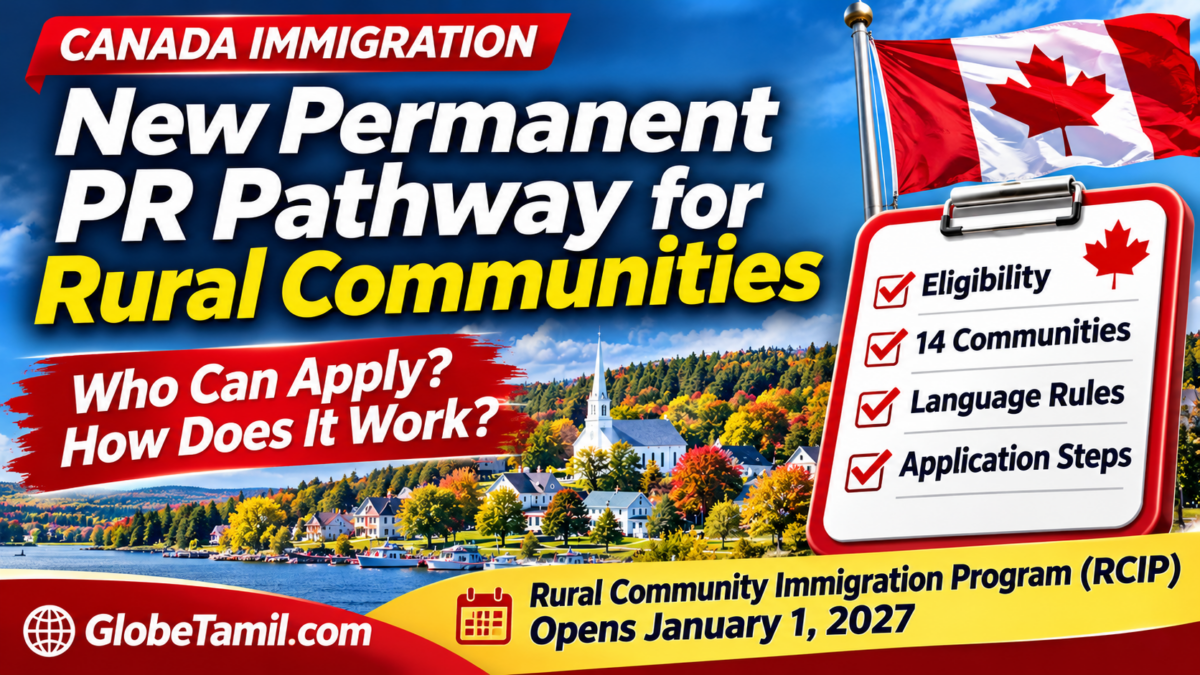
Canada has announced a new permanent immigration pathway offering skilled foreign workers, international graduates and eligible temporary residents an opportunity to obtain permanent residence by working in smaller Canadian communities.
On November 9, 2026, Immigration Minister Lena Metlege Diab announced that the Rural Community Immigration Pilot (RCIP) will become a permanent program effective January 1, 2027.
The initiative aims to address labour shortages, support local businesses and encourage newcomers to settle outside major metropolitan areas.
Who Can Apply?
The Rural Community Immigration Program provides an alternative pathway for eligible skilled workers and international graduates, including candidates already living in Canada and qualified applicants overseas.
However, applicants must secure a genuine job offer from an officially designated employer in a participating community.
They also need a community recommendation and must satisfy requirements relating to work experience, education, language proficiency and settlement funds, unless exemptions apply.
Generally, applicants require at least one year of qualifying work experience within the previous three years. Certain international graduates who studied in participating communities may qualify for exemptions.
Language requirements vary depending on the occupation, making the program potentially accessible to workers across different skill categories.
Opportunities Across Canada
The program is expected to continue in 14 communities across six provinces, including five communities in Ontario.
For people living in Toronto, Brampton, Mississauga and Scarborough, this could provide an alternative to other immigration pathways. However, applicants must be willing to relocate and establish themselves in a participating community.
How to Apply
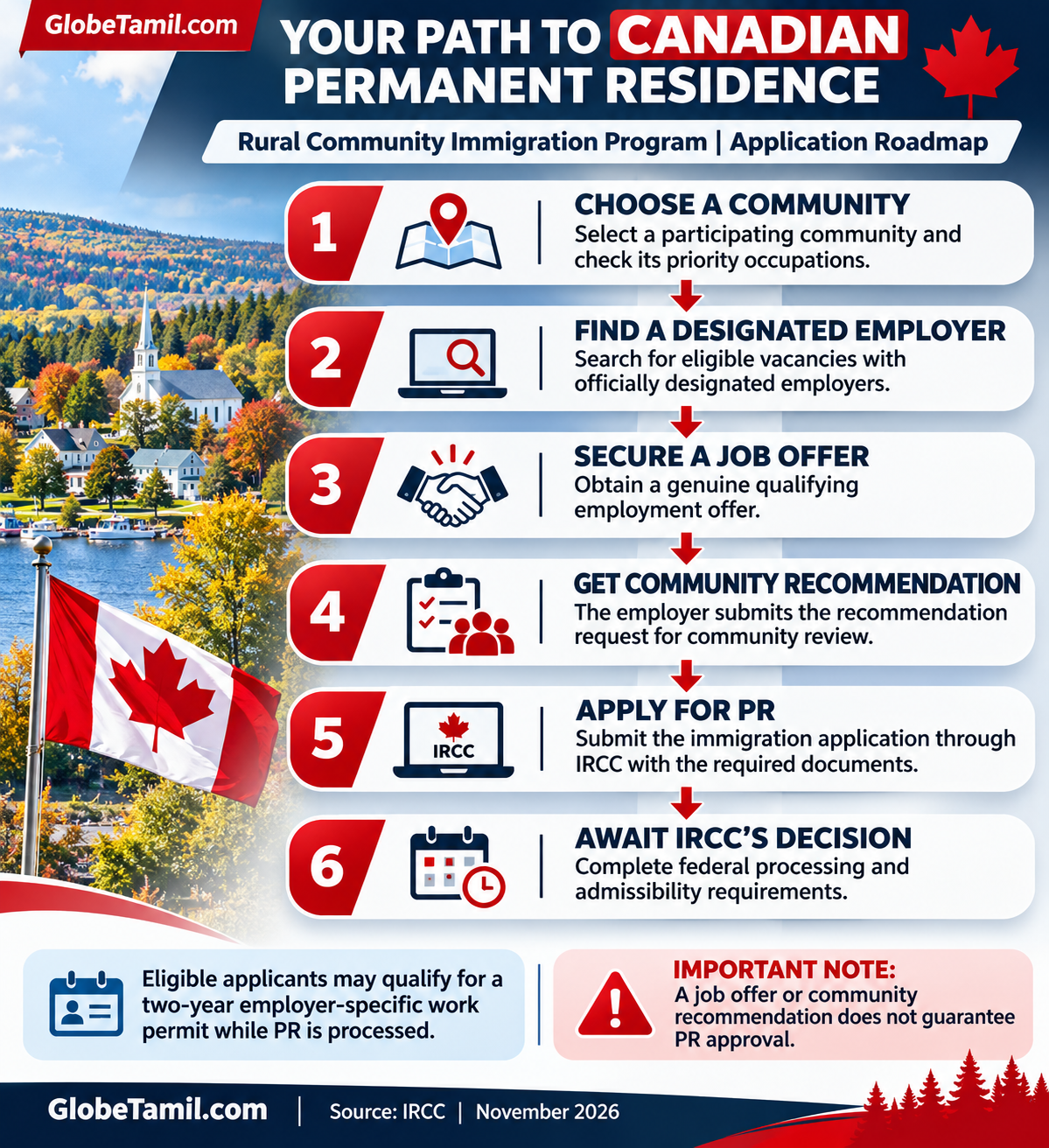
Interested candidates should first identify communities where their occupations are prioritized and then search for vacancies with designated employers.
Once a qualifying job offer is secured, the employer initiates the community recommendation process. Successful candidates can subsequently submit their permanent residence applications to Immigration, Refugees and Citizenship Canada (IRCC).
Eligible applicants may obtain employer-specific work permits while their applications are processed. Their spouses or common-law partners may also qualify for work authorization.
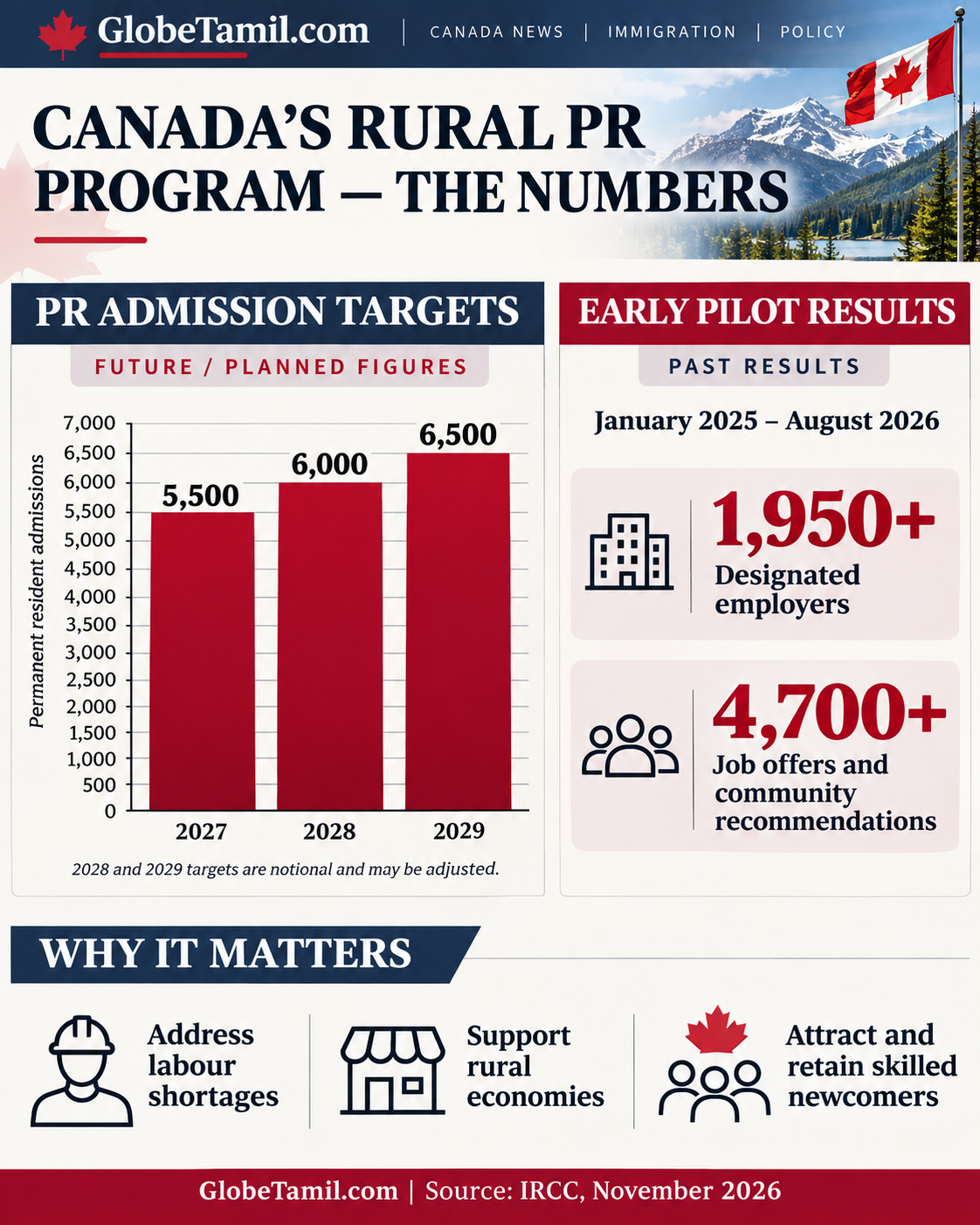
A Long-Term Immigration Opportunity
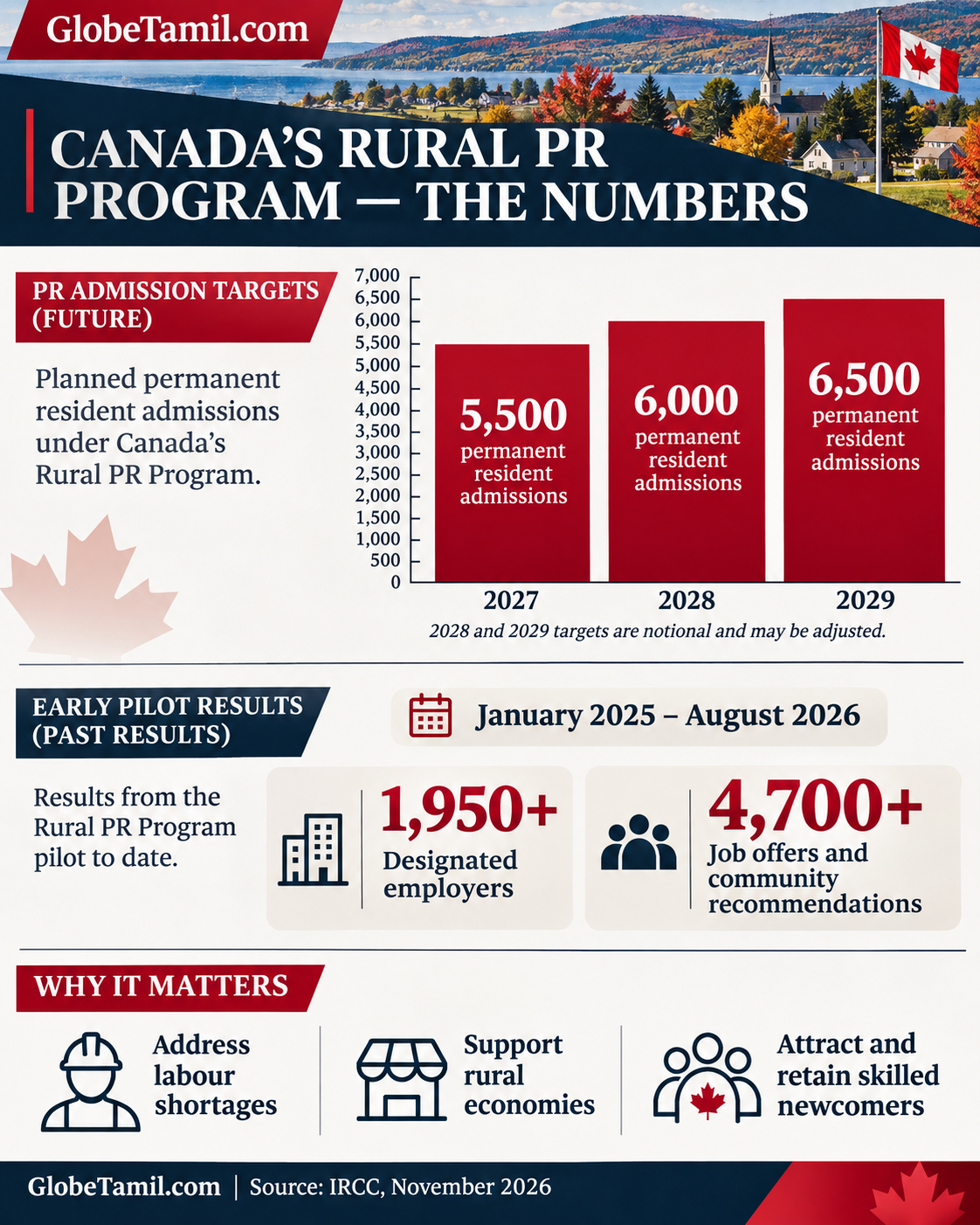
The federal government has allocated dedicated permanent residence admission targets for the program over the coming three years, reflecting its commitment to addressing rural labour shortages.
[INSERT INFOGRAPHIC 4: PR Admission Targets for 2027–2029]
Although the pathway creates new opportunities, permanent residence is not guaranteed. Applicants must meet federal requirements, and IRCC makes the final immigration decision.
For official eligibility requirements and application information, visit:
GlobeTamil.com | November 9, 2026
Disclaimer: Immigration rules and community priorities may change. Applicants should verify current requirements with IRCC before applying.
Research, Content & Infographics: Arun Arokianathan